I am a beer guy. I love beer. Light, dark, IPA, stout and everything in between – but sometimes I need a break.
I have never been a big liquor guy, especially after a few rough nights in college (I blame my wife and a game of shot glass checkers that did not go my way). With that said, I have been searching for that replacement drink, that change of pace for when I need a break from beer.
Bourbon has become my go-to drink of choice – thanks to my friends at the Appleton Curling Club and my cousins and aunt who are bourbon “enthusiasts” to put it mildly – others might call them fanatics or zealots. I have come to love the complex aromas and flavors produced by bourbon and the sheer variety of options that are all a little bit different from the last and with this newfound love, I have found myself asking – what are the differences between bourbon, scotch and whiskey?
Here is what I found in my alcohol-fueled adventures.
What Is Bourbon?
Do you love ‘Merica? Good – it is the only place that you can find bourbon – just like scotch can only be distilled in Scotland. Per American Bourbon Association guidelines, a bourbon must meet specific criteria – it must be distilled in the United States, it must have a mash bill that is a minimum of 51% corn, must be a minimum of 80 proof and no higher than 160 proof, and it must be aged in new, charred oak barrels.
With a mash bill that is more than 51% corn, bourbon provides a sweeter flavor than other whiskeys and scotches. Bourbon must be all natural with no additives and contrary to popular belief – a bourbon does not have to be distilled in Kentucky – even though your favorite bourbon probably is.
What Is Scotch Whisky?
I love scotch. Scotchy scotch scotch. Here it goes down, down into my belly.
When you play a sport like curling, with its roots in Scotland, it only makes sense that a good glass of scotch would be included on the required equipment list. A little aiming fluid if you will. Scotch is a malt and/or grain liquor that has similar attributes to Irish and American whiskey – but is spelled whisky without the e. Scotch Whisky can be divided into five primary categories: Single Malt, Single Grain, Blended, Blended Malt, and Blended Grain.
To be considered scotch whisky, the spirit must be distilled in Scotland, must be a minimum of 40% ABV with a maximum of 94.8% ABV, must be distilled with malted barley, water, and yeast, may have cereal grains for color, and must be aged in oak barrels for a minimum of three years. A key characteristic of scotch whisky is a smoke flavor that is derived from peat burned during the malting process.
What Is Whiskey?
At this point, you may be asking – what is whiskey? Whiskey is a more general term for a distilled spirit that is made from fermented grains and aged in wood barrels. The best way to think about whiskey in terms of this debate is that all bourbon and scotch is whiskey, but not all whiskeys are bourbon or scotch. Whiskey can be found all over the world with different flavor profiles and mash bills. Whiskey must be bottled at a minimum of 80 proof.
Irish Whiskey – Irish whiskey is distilled in Ireland and can only be distilled with malted barley, water, and caramel coloring and it must be aged in wooden casks for a minimum of three years. Popular Irish whiskeys include Jameson, Redbreast, Tullamore Dew, and Proper Twelve by UFC Fighter Conor McGregor.
American Whiskey – American whiskey features a mash bill that utilizes more cereal grains without a dominant grain and must be distilled in the United States. Popular American whiskeys include Jack Daniel’s, Jim Beam, Seagram’s, Bulleit, and Southern Comfort.
Canadian Whisky – Drinkers who enjoy a smoother, lighter whiskey may find that they love Canadian whisky (yes, it is spelled without the e). Canadian whisky uses a higher percentage of corn in its mash bill and must be aged in wooden casks for a minimum of three years. Popular brands include Crown Royal, Canadian Mist, and Black Velvet.
READ MORE: Does Alcohol Make You More Creative?
Terms To Know When You Choose Your Next Bourbon
If you are just getting into the bourbon game, like I am, you may be searching for a brand-new favorite and you will come across a goddamn dictionary of bourbon terms that will seem like a foreign, alcoholic language to you. Here are a few terms that I have found interesting and useful in my search for delicious bourbons.
Angel’s Share – When whiskey is aged in barrels, a small portion of the product evaporates through the wood – approximately 2% of the alcohol – and this is known as the angel’s share.
Cask Strength or Barrel Proof – This term is for whiskeys, bourbons, and scotches that are bottled straight from the barrel without any water added to reduce the proof point. Cask strength whiskeys will have a higher ABV.
Blended – Whiskey that is blended contains a mixture of 20% 100-proof straight whiskey and additional whiskey, spirits, or grains. Blended whiskey is generally sold at 80 proof.
Bottled in Bond – To prevent cheap mixes of whiskey and other ingredients – think Old West cure-all “medicines” – the government put forth the Bottled and Bond Act of 1897. This law required that bonded bourbon be stored in regulated warehouses for four years and must be the product of a single distillery to ensure quality.
Single Barrel – This one is pretty simple, but speaks to quality. With so many barrels from different batches of whiskey and small variances in flavor, a single barrel bourbon is bottled from a single barrel and not a mixture from the same batch or different batches.
Small Batch – Whiskey and bourbon age differently based on where they are stored in the rack house and this creates different flavor profiles. A small batch bourbon is a bourbon that is created from a small number of specific barrels in the rack house to create a unique flavor.
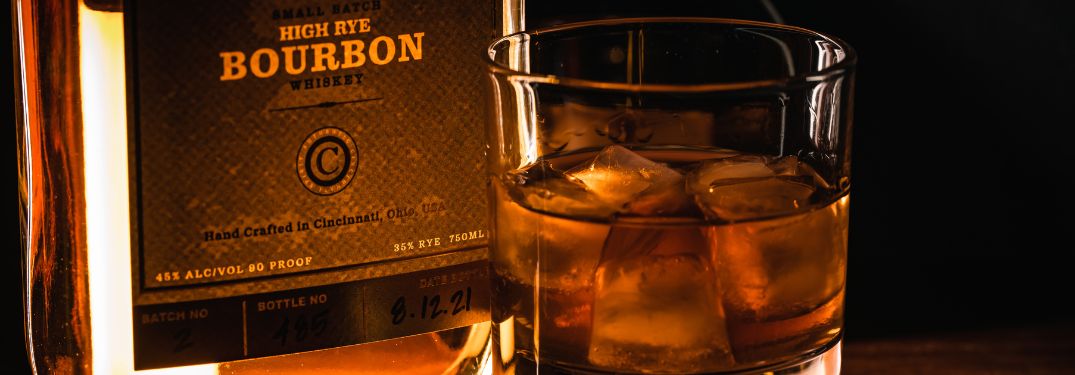
High-Rye – Bourbon must be 51% corn when distilled and the other 49% of the mash bill can be made up of a variety of grains with most including 12% – 15% rye. A high-rye bourbon will generally have 20% or more of the mash bill made up of rye and will have a spicier flavor.
Wheated – A wheated bourbon is a bourbon that replaces the rye grains found on most mash bills with wheat – which possesses a more low-key flavor and allows the sweetness of the corn to shine. Redemption Wheated Bourbon is one of my favorites and uses 45% winter wheat.
READ MORE: What Is the Best Oktoberfest Beer?
I am a creature of habit, and in most cases, go out of my way to avoid the strange, new, and different – which makes finding a bourbon that I love amid the endless cornucopia of corn-distilled spirits even more difficult. As a friend of mine is fond of saying – the only thing worse than new is different. I hope that this quick explanation of the differences between bourbon, scotch and whiskey has helped you learn a thing or two. I know it has educated me.
And maybe next time you head to your local liquor store or grocery store, it may make you reach for something different than your normal – but be careful – you may find yourself going down a deep, dark, and alcohol-fueled rabbit hole like I have.
Leave a comment below and let me know what your favorite bourbon, scotch or whiskey is that I should try next and be sure to let me know about any other topics you would like to read about on Hops & Thoughts.
Beer of the Day
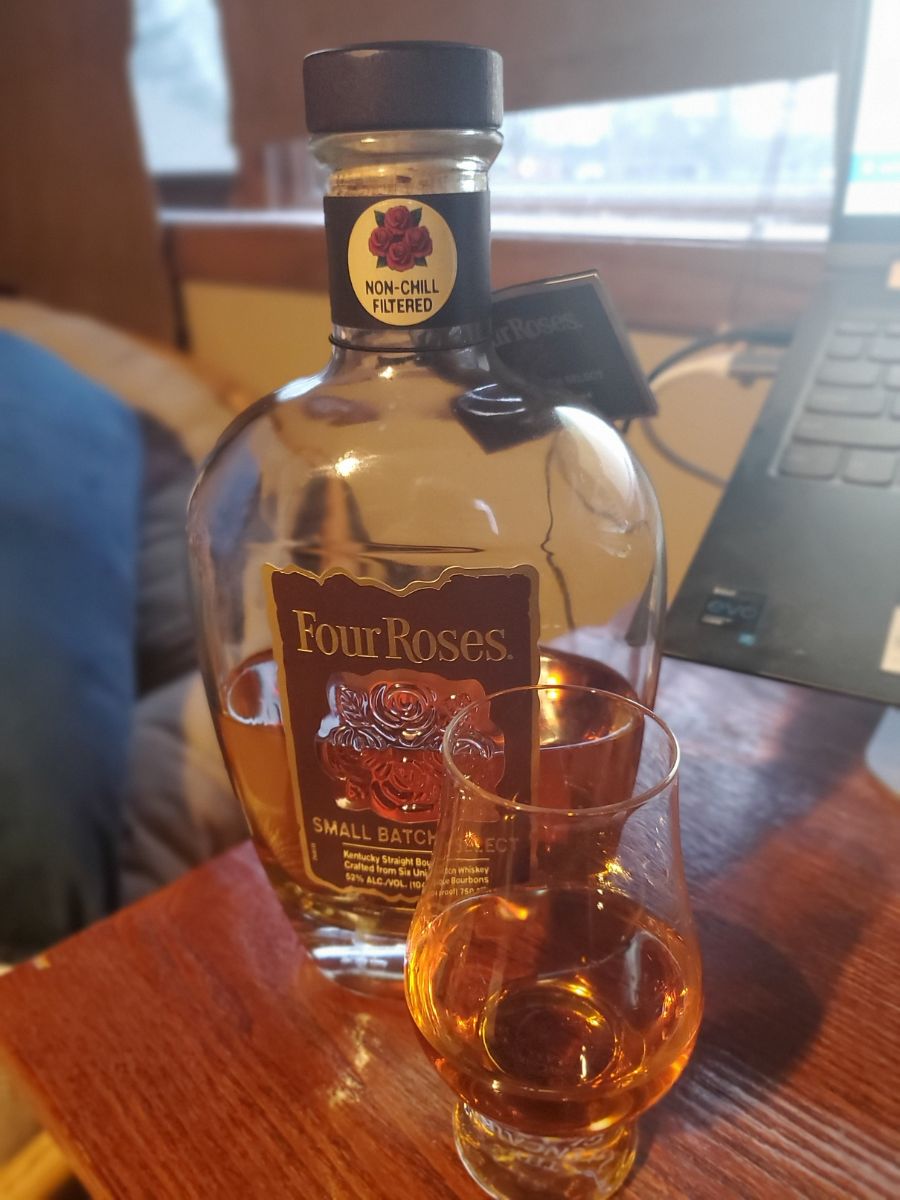
Beer: Not Beer – Four Roses Small Batch Select Bourbon
Distillery: Four Roses Distillery, LLC
Style: Kentucky Straight Bourbon Whiskey
ABV: 52%
Purchased At: Festival Foods in Oshkosh, WI
This is one of my more recent bourbon purchases that I saw on a Best Beginner Bourbons YouTube video – be wary of that rabbit hole. It is a combination of six distinct bourbons and just feels very smooth to me. I get a lot of caramel notes from this bourbon and it just has a nice burn, not a sharp bite like some. Really love this bourbon!
 Hops and Thoughts
Great article!!
LikeLike